Table of Contents
ToggleAre you confused about deciding between prefab vs traditional cabin construction? Then, the answer to this question depends on your project priorities. If you want portable cabins or containers for industrial or commercial use, then prefabricated construction is actually better. It usually offers 30 to 50 per cent faster build times, and 20 to 40 per cent lower cost with superior quality control. For design flexibility and custom geometry, traditional cabins always gives an edge.
In this blog, let us look at the basic differences between prefab and traditional construction to choose the suitable method for your upcoming project, especially for applications like portable cabins, site offices, and containers.
Prefabricated Cabins
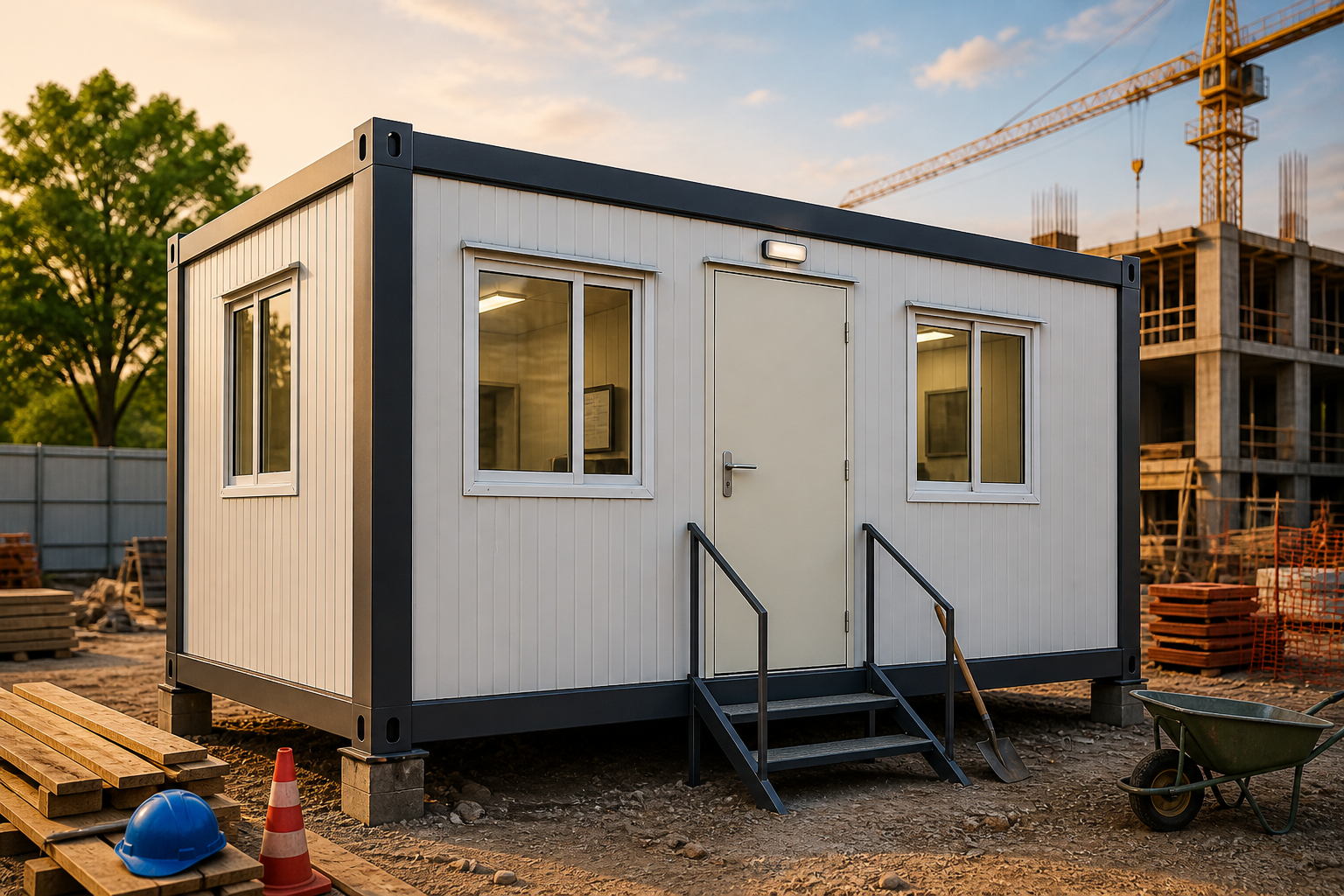
Prefabricated construction basically means manufacturing the required building components or complete modules in a controlled factory environment and then transporting them to the project site for assembly.
The manufacturing of flat sections like walls or floors is panelized prefab, while modular prefab includes complete room modules that are ready-made. In terms of faster project completion, prefabricated construction is widely used in portable cabins and container office units, where quick deployment is required.
Traditional Cabins
Traditional construction is known as stick-built or reinforced concrete. Here, everything is built from the ground up at the construction site. It’s a conventional labour-intensive method of cabins since foundations, walls, roofs, and finishes are all created at the site itself.
Prefab vs Traditional Cabin Construction
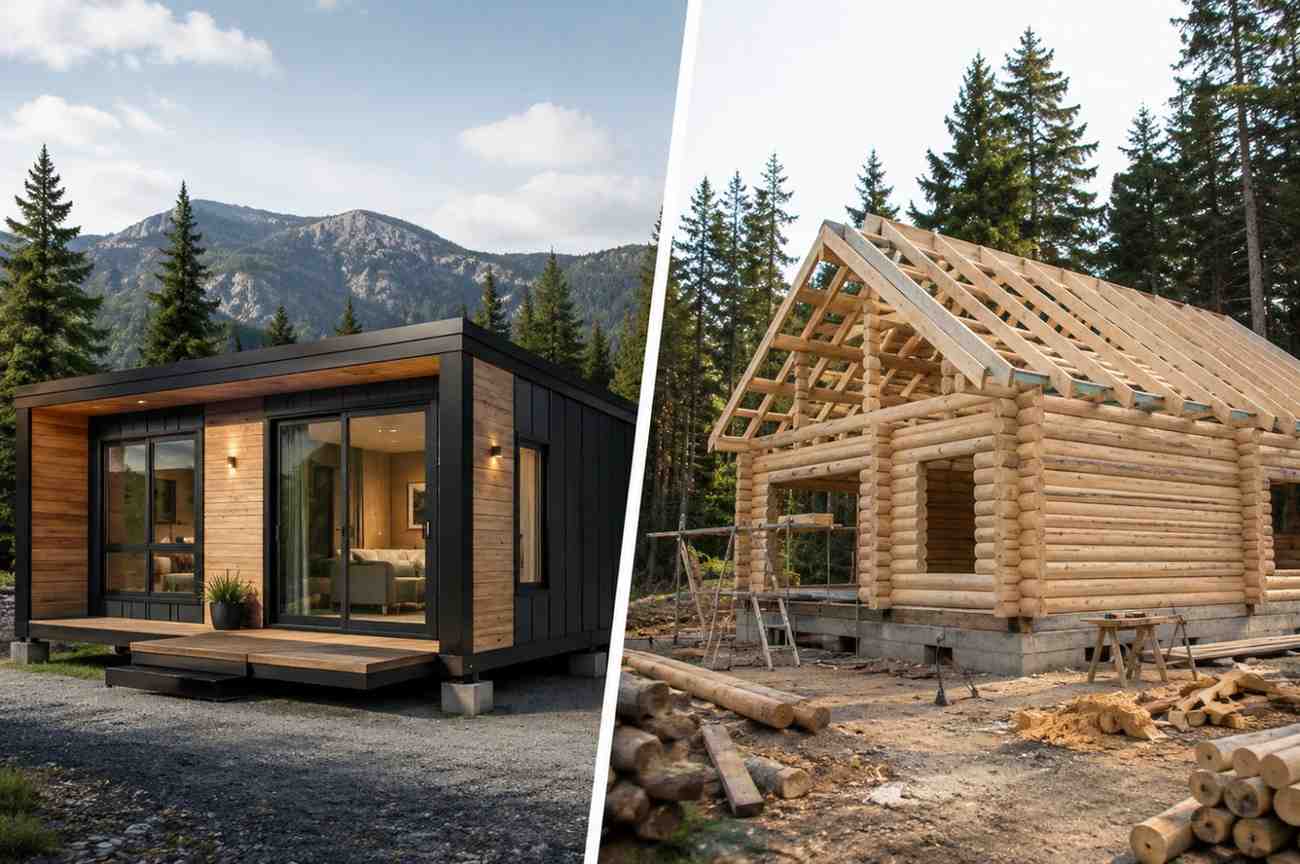
If we compare portable cabins and containers with traditional vs prefab construction, prefab is a better choice for various aspects. It delivers faster timelines, lower costs, superior quality, and environmental benefits that give a clear advantage for prefab cabins.
| Priority | Winner | Key Advantage |
| Speed | Prefab | 30–50% faster |
| Cost | Prefab | 20–40% cheaper |
| Quality | Prefab | Factory precision |
| Sustainability | Prefab | 53% lower emissions |
| Design Flexibility | Traditional | Any geometry possible |
| Custom Residential | Traditional | Best for unique homes |
| Portable Cabins | Prefab | Industry standard |
Speed of Construction
In terms of construction speed, prefab cabins has the upper hand. Project timelines are typically 30 to 50 per cent shorter. For example, prefab cabins may take only six to eight weeks compared to four to six months for traditional cabins.
Factory fabrication happens in parallel with site preparation, leading to faster project delivery. In traditional construction, work happens in a sequential process, and weather conditions can cause major delays.
Prefab manufacturing takes place in controlled factory environments where the weather does not impact progress. When comparing prefab vs traditional construction for businesses needing quick setup, prefab is clearly faster, especially for portable cabins and container-based offices.
Cost Effectiveness
Prefab cabin and container construction is cheaper than 20 to 40 per cent cheaper than traditional construction if we compare the available data. Here, the labour costs are reduced as factory manufacturing costs much less than the labour-intensive work onsite. In addition to that, the prefab cabin construction uses 65 per cent less raw materials and generates much less waste compared to the traditional method.
The cost gap often gets narrowed down in cases of highly customised projects where the standardisation benefits decrease. And, for portable cabins, the prefab is the clear cost winner.
Quality Control
Prefab cabin construction offers strong quality control. Factory conditions usually involve rigorous testing before the dispatch of prefab structures. Controlled environments, consistent temperature, and multi-stage quality checks ensure higher precision.
Design Flexibility
Traditional construction is better when design flexibility is the priority. It allows any architectural style or material usage.
Prefab construction works best with modular designs. In portable cabins and container-based structures, modifications are possible but limited compared to traditional methods.
Durability and Strength
Prefab portable cabins are stronger because they are designed to withstand transportation and handling, which cannot be overlooked. Also, they use durable steel frames that perform better even under harsh weather conditions.
Traditional construction uses brick-and-mortar systems that are not designed for relocation and may require higher long-term maintenance.
Environmental Impact
Prefab cabins and containers are more environmentally friendly since it uses 65% less material. Furthermore, prefab cabin and container construction reduces carbon emissions by around 53% and lowers water usage by nearly 48% compared to traditional methods.
Steel components used in portable cabins and container structures are recyclable, and for the same reason, prefab is a more sustainable option. Meanwhile, traditional cabin construction generates more waste and has a higher environmental footprint.
Application Suitability
Prefabricated cabins are the best when it comes to industrial and commercial projects such as warehouses, factories and portable cabins. In case of custom residential projects where particular architectural requirements is needed traditional construction remains better.
Specific use cases:
-
- Portable Cabins: Prefab is ideal; traditional is not suitable
-
- Warehouses and Factories: Prefab is ideal; traditional is less efficient
-
- Commercial Spaces: Prefab is ideal; traditional is possible but slower
-
- Custom Residential Homes: Traditional is best; prefab has limited options
-
- Multi-story Buildings: Traditional is better; prefab has code constraints
Why Prefab Is Perfect for Portable Cabins in Jaipur
For companies manufacturing portable cabins or containers in Jaipur, prefab construction is the only logical choice:
-
- Rapid Deployment: Cabins can be delivered to the project site within the deadline.
-
- Cost Efficiency: Prefab cabins are most affordable for temporary offices and event locations.
-
- Moveable and Reusable: Components of prefab can be disassembled and reassembled at new locations
-
- Weather-Independent: Factory manufacturing is the best as it is unaffected by outside weather conditions.
-
- Quality Assurance: Controlled production in the factory helps to meet the quality standards in the case of prefabs.
When Traditional Construction Might Be Better
Traditional construction still has merit for specific scenarios:
-
- Highly custom residential homes with unique architectural requirements
-
- Projects requiring complex geometry that don’t fit modular dimensions
-
- Multi-story buildings where prefab has code constraints
-
- Locations without factory access where transport costs outweigh benefits
For portable cabins, however, traditional construction is not practical where simply speed, cost, and mobility become limitations.
FAQs
1.What is the obvious difference in prefab vs traditional cabin construction?
In prefab cabin and container construction, the components are manufactured in a factory, then assembled on-site. Traditional construction builds everything from the construction site only.
2.How much faster is prefab construction completed compared to traditional?
Prefab cabins are usually completed 30–50% faster, within 6 to 8 weeks generally.
3.Is prefab cabin construction cheaper than traditional construction?
Yes, prefab cabin construction is typically 20–40% cheaper on average, compared to conventional construction.
4. Can portable cabins be built using traditional construction?
Portable cabins using traditional construction are not practical since the traditional construction is slow and expensive.
5. Which method has better quality control in prefab vs traditional cabin construction?
Prefab cabins and containers win due to factory conditions with consistent temperature, machine precision, and multi-stage quality checks before shipping.
Read More Blog :-
PUF Panel Price in Jaipur – Cost, Types, Features & Material Guide
Why Portable Cabins Are the Best Solution for Temporary Offices in Jaipur